


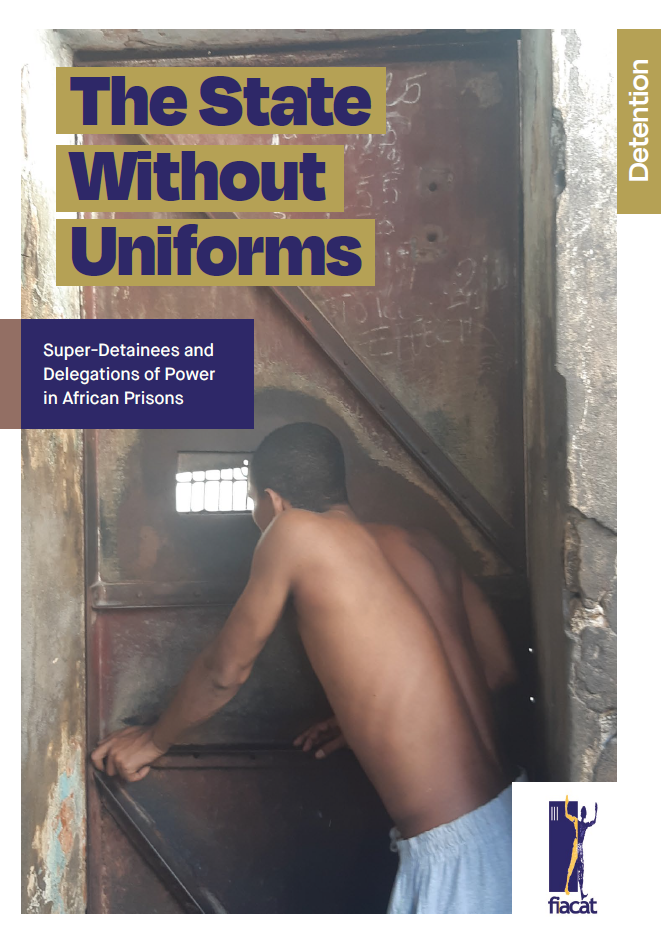
On the occasion of the Regional Conference on Torture in Detention in Sub-Saharan Africa, held in Abidjan on 28–29 April 2026, FIACAT is presenting a comparative study conducted in Côte d’Ivoire, Congo, Chad, Cameroon, the Democratic Republic of the Congo, and Madagascar.
This study was carried out by three consultants: Dr. Carole Berrih, a public administration researcher affiliated with CERDAP² (Université Grenoble Alpes / Sciences Po Grenoble); Louisette Ranorovololona, a Malagasy senior consultant specialising in vulnerability reduction; and Chloé Ould Aklouche, a PhD candidate in political science at the Les Afriques dans le Monde (LAM – Sciences Po Bordeaux) research center. Data were collected between May and July 2025 by ACAT members and volunteers who regularly work within prison facilities.
Based on interviews and field observations, the study sheds light on a largely overlooked yet central reality of prison life: the role of “super-detainees,” incarcerated individuals entrusted with management, control, and disciplinary functions over fellow detainees. While the forms and modalities of this power vary across contexts, they consistently rely on hierarchical structures that are often recognized and overseen by prison administrations.
Although international standards prohibit the delegation of disciplinary functions to detainees, the study shows that such practices are, in reality, institutionalised. It raises important questions about State responsibility and calls for renewed dialogue with national authorities to rethink prison governance and ensure the dignity of all detainees.
 Fiacat_etude_detention-ENG.pdf Fiacat_etude_detention-ENG.pdf |